This post is adapted from a piece originally published on the PC Bushi blog, in October of 2017 under the title “Poctober: the Spinx and the City in the Sea.”
October is a good month to spend some time with Edgar Alan Poe. “Poctober,” if you will. I find that the short story format, of which Poe made frequent use, lends itself quite well to the horror and fantasy genres, especially when you’re looking for a quick seasonable hit rather than a weeks or months-long experience. Several years ago around this time of year, I did some Poctober readings and had a few thoughts to share:
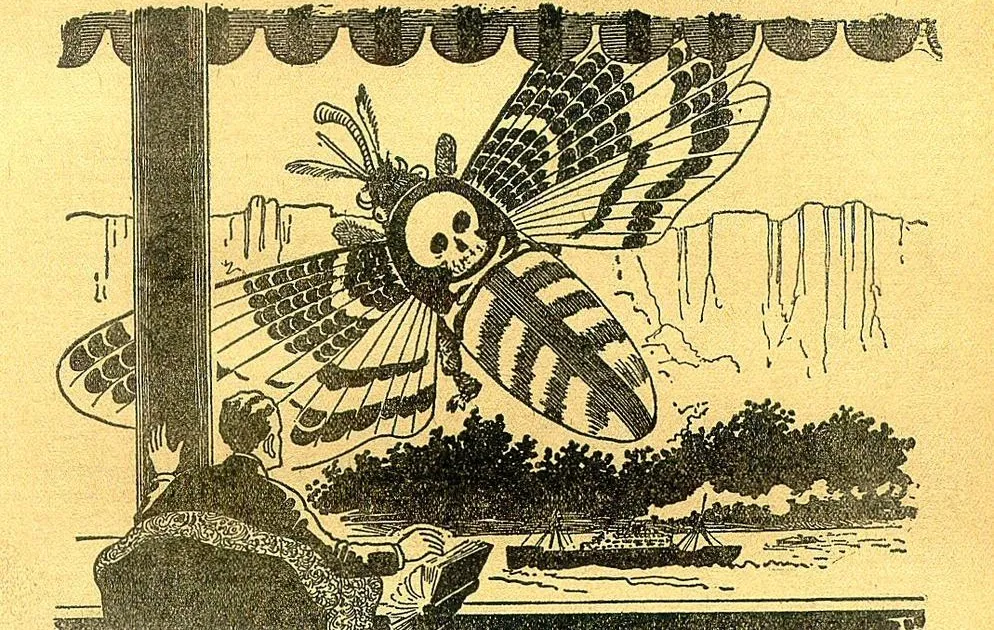
“The Sphinx” turned out to be an interesting choice. Set against the backdrop of a cholera outbreak in New York, Poe immediately establishes a potent undertone of dread. In the tale, he is staying at the country cottage of a friend for the summer. Though they are distanced from the plague and surrounded by the beauty of nature, the peacefulness is tainted. Daily they receive messages about the passing of acquaintances and friends.
Poe relates his growing anxiety amid the gloom, and eventually shares the story of an experience beyond his explanation. He describes witnessing a giant horror across the river and admits that the sight made him question his sanity. This thread of madness-inducing (or sanity-questioning) horror places Poe’s influence on Lovecraft on full display, for this would become HPL’s brand through and through.
I’ll forgo explaining the ending here, in case you’d like to read it (it’s quite a short story), but suffice it to say it ends on a somewhat humorous note. Rather than madness or death, Poe issues something of a sad trombone to his literary persona.
“The City in the Sea” is a dark piece about a city in the West where Death sits upon a throne. The titular city is visited by a “long night-time” and untouched by the light of heaven. It is a place of riches and impressive constructions – domes and fanes and Babylon-like walls, and towers, and shrines.
In the end, the waters turn red and Hell rises to do reverence to the city.
I was quite impressed by the poem, though I can’t say I fully grasp every element of it. It sounds much as if the city is a domain of Hell on earth (how’s that for a commentary on Western civilization), and yet one of the earliest lines says
“Where the good and the bad and the worst and the best
Have gone to their eternal rest. ”
Perhaps this line is speaking of the West in general, rather than the city. Otherwise I’m not quite sure what to make of this haunting place, beautiful and yet foul, if the best be there as well as the worst.
In an earlier form, the poem was titled “The Doomed City,” and was later reworked and renamed “The City of Sin” and then finally “The City in the Sea.” Inspirations for the work are said to include the Biblical city of Gamorrah and Coleridge’s “Kubla Khan.” It would go on to inspire other creators, including Danish composer Poul Ruders:
Overall, I’d say this was a pleasing reintroduction to Edgar Allan Poe. Much like Howard and Lovecraft before I’d read and researched further about them, his work was more varied than I’d realized.

Leave a Reply